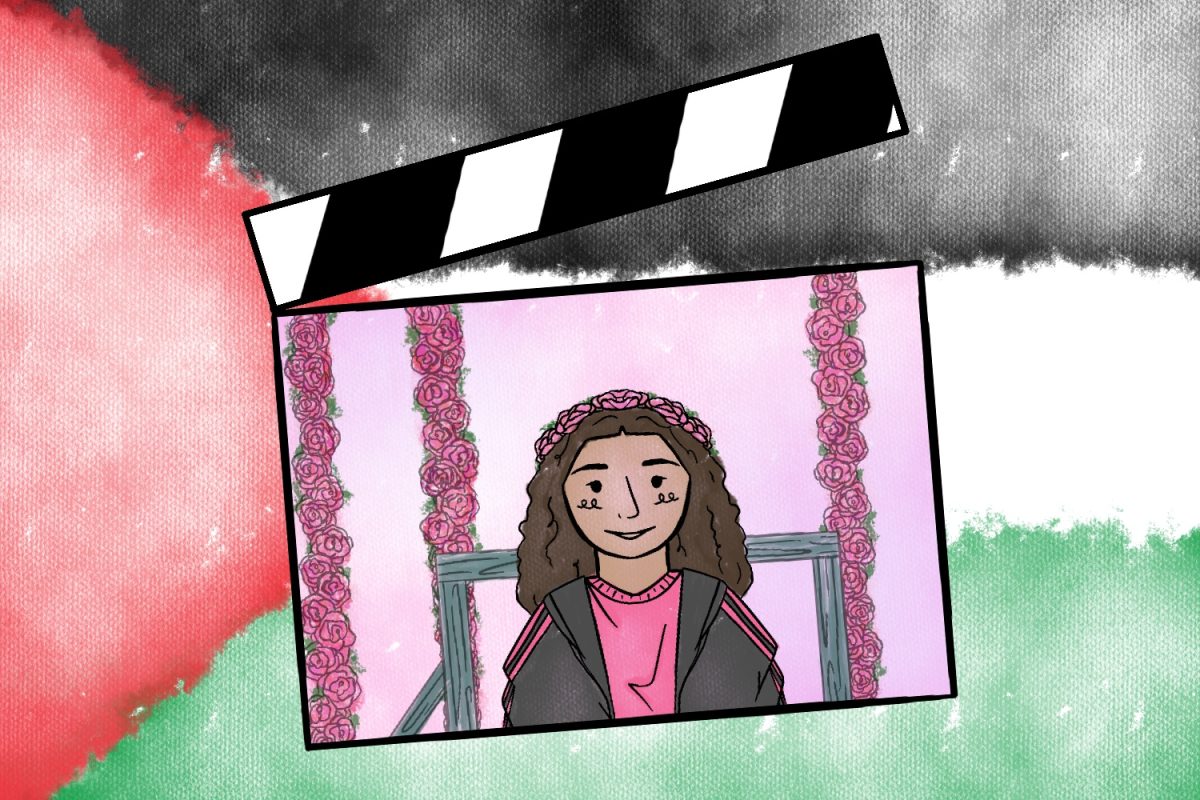


The debate surrounding who is allowed to tell and enjoy queer stories continues to accompany conversations about queer male media.
Because I don’t live under a rock, I’ve heard about HBO’s “Heated Rivalry,” which was released last November. The viral show starring Connor Storrie and Hudson Williams has had everyone and their mother hooked since its release, reaching 10.6 million viewers in the U.S., according to Warner Bros.
While the show adaptation of “Heated Rivalry” has gained recent popularity, the book has existed in queer reading spaces since its release in 2019.
Like any good English major, I take pride in reading books before watching their television counterparts. I picked up Rachel Reid’s “Heated Rivalry” the summer of its release in my desperate search for half-decent reads with queer characters whose stories reflected my own as a gay man.
Even though I enjoyed the book, my relationship with it was complicated by the much larger conversation surrounding queer literature at the time. The heart of the debate revolves around the policing of who is allowed to tell and consume queer narratives.
Since the show’s release, many TikToks and Instagram reels, along with critical reviews, have unpacked the representational discourse surrounding the series.
In an unexpected twist, Jacob Tierney, the show’s director, cited “wine moms” looking for a thrill as a key viewer demographic in a December 2025 Hollywood Reporter article.
A 2025 review in The Guardian said that “Heated Rivalry” plays into a fetish that “desexes gay men, just enough to make them palatable, like pets for young women,” while a 2026 article in The Free Press described the show as “softcore gay porn written by and for women.”
“Heated Rivalry” is not the first time books or shows about gay men have been scrutinized for having non-male authorship.
“If I did get published, I worried the queer readers I wanted to reach wouldn’t pick up my book because they’d assume I was straight. These concerns led me to believe that the only way my books would hold value was if I was open about my identity,” says Alice Oseman, author of “Heartstopper,” a queer-romance graphic novel.
Oseman’s experience reflects how some queer authors felt forced to justify their place in the genre.
“Red, White, and Royal Blue,” by Casey McQuiston, has received similar criticisms for having a non-male author, which feels familiar, tired and gendered. Female characters in media and films have long been written by men.
To claim that the show or book fetishizes gay men would ignore the fact that Rachel Reid is writing from within the community and capturing authentic and important queer milestones.
Ilya, Shane and other gay characters engage with real, authentic LGBTQ+ experiences throughout the show, such as coming out, internalized homophobia and the pressures of being gay in professional sports.
Jacob Tierney and the film crew wonderfully integrated authentic queer storytelling that goes beyond fetishization.
However, much of the criticism surrounding “Heated Rivalry” lies not only with its authorship and plot, but also with the audience consuming the show.
An HBO spokesman released data showing that roughly two-thirds of “Heated Rivalry’s” viewership is women in a Jan. 2026 New York Times article, driving concerns that the show would become an outlet of gay male fetishization.
To assume that women’s enjoyment of the show is inherently voyeuristic rather than emotional- or plot-based is a blatant generalization. Also, attraction to on-screen characters does not diminish the legitimacy of the story.
“I like ‘Heated Rivalry’ because it has two men engaging in a tender and vulnerable way, which is refreshing to see,” said junior Mary Forrester.
Finally, it is important that non-gay men are encouraged to watch and engage with shows about gay men. I couldn’t be happier that women and heterosexual people are enjoying media with narratives about gay men such as myself.
For most of my life, I have consumed media saturated with heterosexual characters. It is only fair that queer media begin to get the same popularity and treatment.