
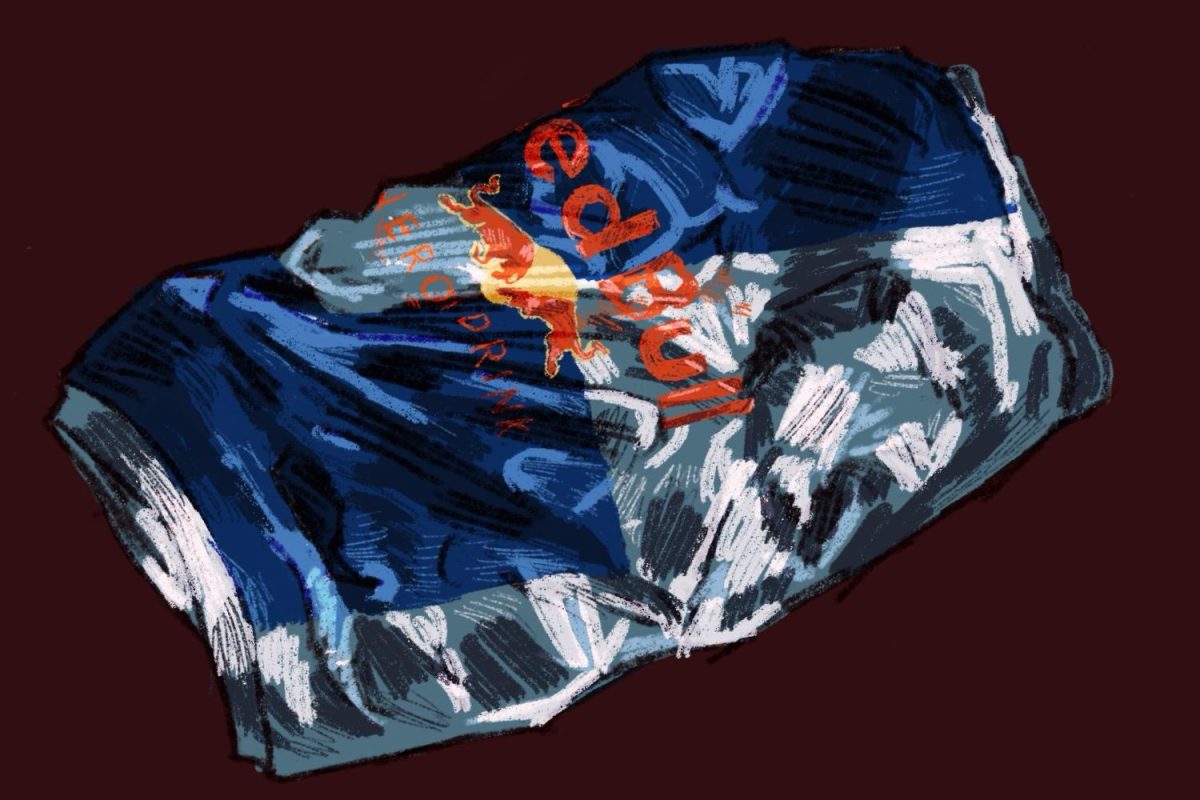
The sharp crack of an energy drink opening became an everyday ritual for me in the first semester of my sophomore year.
Juggling 18 credit hours, a part-time job and a social life, I could not get through the day without multiple Celsius drinks.
These drinks are cheap, easily accessible and popular in my age group. However, there are many reasons I have decided to put down the can.
Primarily, the temporary boost began to take a larger toll on my body.
Most energy drinks contain far more caffeine than the average cup of coffee, which contains only 95 milligrams, while Celsius, for example, can contain up to 270 milligrams per can according to the Celsius website.
Although this was adequate to keep me awake while chronically sleep-deprived, I often felt jittery and anxious, which made it hard to focus.
Research shows that consuming energy drinks can worsen anxiety symptoms, according to a Sept. 2025 Mayo Health Clinic article.
A mix of anxiety exacerbated by excess caffeine consumption, especially later in the day, had caused me to struggle to fall asleep at night.
“The consumption of energy drinks increases sleep latency and the effects of energy drinks can persist for up to 8 hours and can lead to somnolence,” according to a Feb. 2019 article published in the journal Sleep Disorders.
Because I was waking up sleep-deprived more mornings than not, I began to rely on my Celsius habit to get through the day, creating a vicious cycle.
On top of that, added sugars should make up no more than six percent of daily calories, according to an Aug. 2024 American Heart Association article. For someone consuming the recommended 2,000 calories a day, that means no more than 120 calories, which is around 30 grams of sugar.
Many energy drinks contain around 40 grams of sugar per can, according to a July 2020 Harvard School of Public Health article.
Although the sugar content improves the taste of the drink, it can also lead to a sugar crash around an hour after consumption, according to an Aug. 2025 Harvard Health article.
The symptoms of sluggishness and fatigue often return after your blood sugar levels go back to normal, which can increase the desire to drink another energy drink.
Even the sugar-free alternatives to popular energy drinks still pack a ton of caffeine, and studies have shown that they can contribute to metabolic syndrome and digestive issues.
While these long-term effects are concerning, research also points to more immediate and severe health risks of energy drinks.
In the worst cases, the FDA has linked energy drinks to death and other negative health outcomes such as convulsions, increased blood pressure and heart rhythm abnormalities, according to an Aug. 2025 Harvard Health article.
Despite these risks, energy drinks remain widespread in student culture. They are sold in campus vending machines across the country and promoted on social media as productivity aids. Some are even branded as athletic and fitness enhancers, hiding the complicated health hazards.
Among college students, being busy and worn out can be seen as a badge of honor. Chaotic schedules, extracurriculars and jobs all can increase the desire for as much caffeine as possible to keep up.
This might make quitting energy drinks feel like an impossible feat, but it is not. However, if you are looking to leave energy drinks behind, quitting cold turkey may not be the best solution.
Cutting out energy drinks all at once can increase caffeine withdrawal symptoms such as headaches, irritability and nausea, according to a Nov. 2023 Cleveland Clinic article.
The safer path is to wean off energy drinks slowly and then transition to healthier caffeine boosters such as coffee or tea.
In fact, moderate coffee consumption is shown to have benefits for the heart, such as a lower risk for atrial fibrillation and a fast, irregular heartbeat, according to an Aug. 2023 Harvard Health article.
Personally, I have come to enjoy a cup of breakfast tea in the morning. Not only is the caffeine more compatible with my anxiety, but I also do not experience the heart palpitations or jitters that I loathed from energy drinks.
Though energy drinks seem like a quick solution for exhaustion, no temporary boost is worth the sleep deprivation and long-term health risks. Since I’ve stepped away from energy drinks, I’ve noticed better sleep, more balanced energy and less anxiety.
Prioritizing rest and switching to caffeine alternatives has proven much more effective than relying on a label that promises productivity.