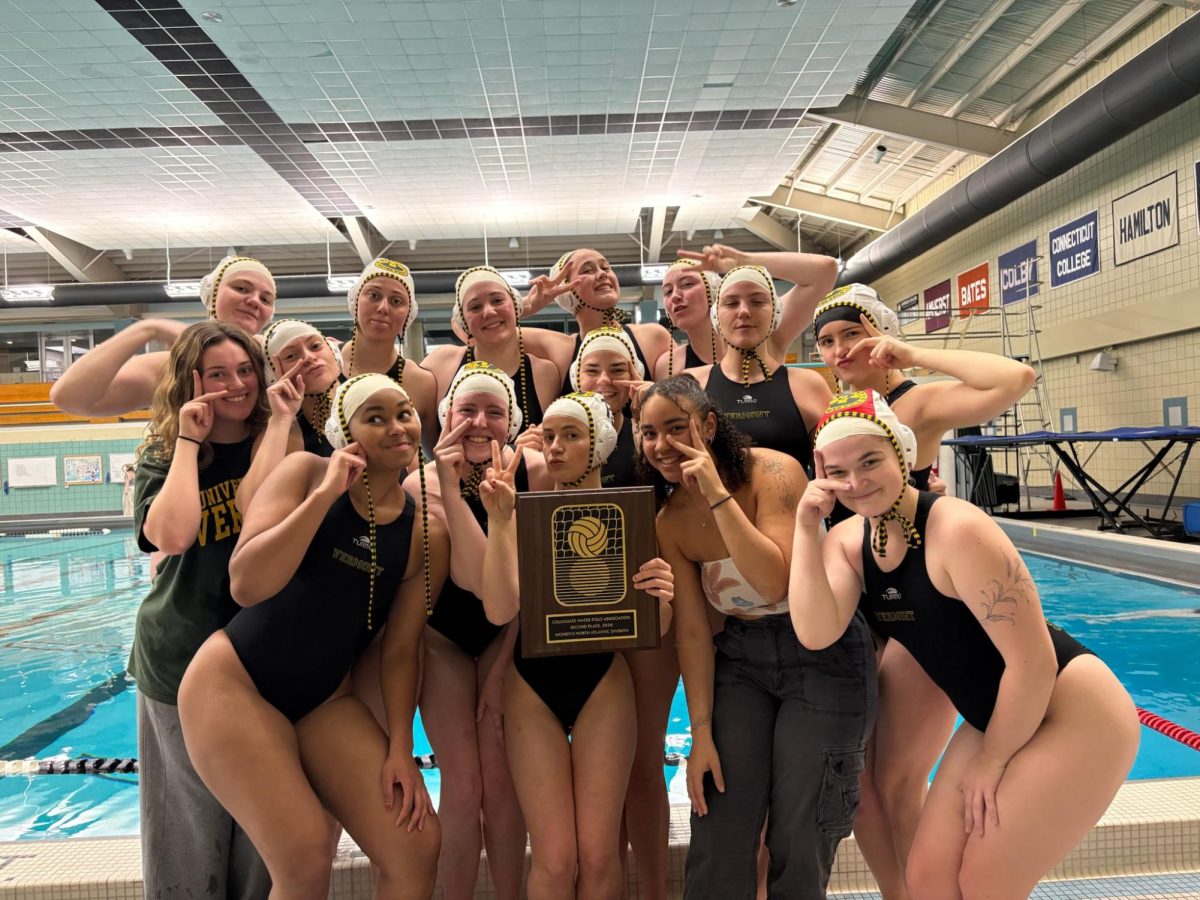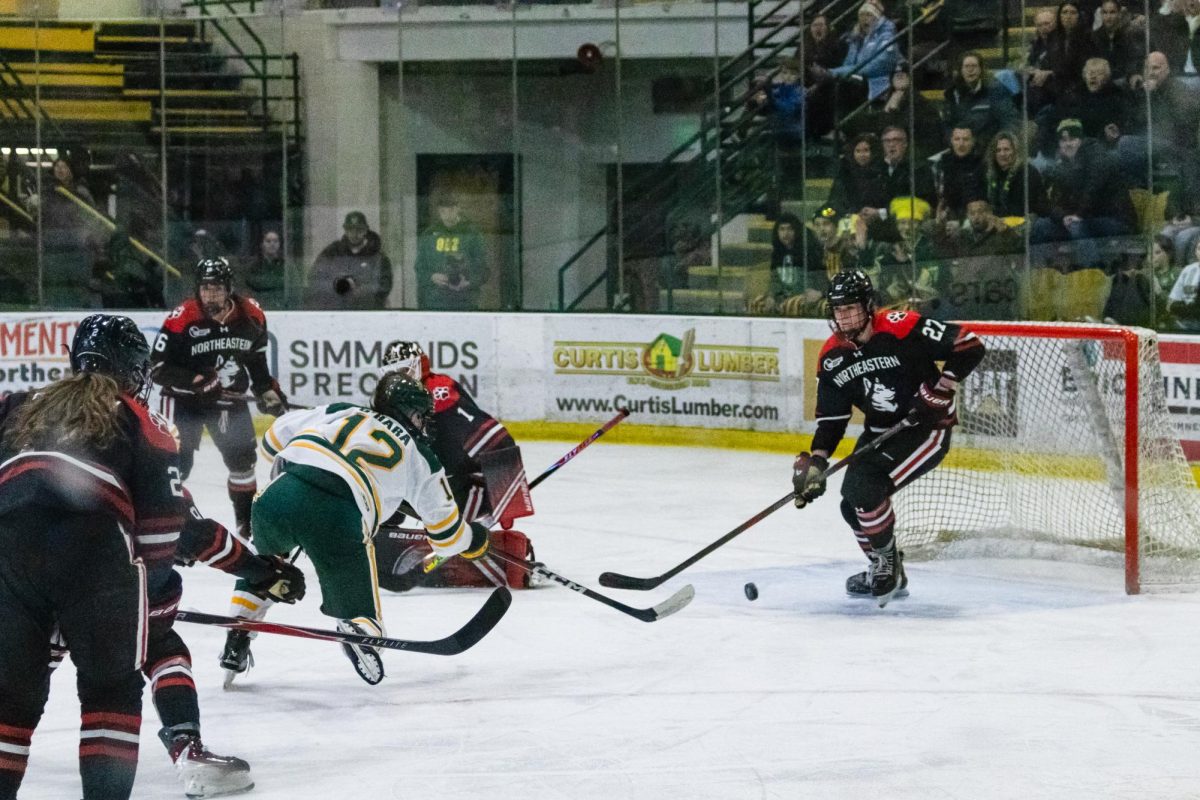


On Feb. 10, the National Federation of Collegiate Club Sports released a new policy banning transgender athletes from competing in its women’s leagues, including at UVM. However, it flew under the radar in the wake of an adjacent move by the NCAA.
The NCAA is the governing body of collegiate sports that oversees 19,886 teams and more than 57,600 athletes across over 1,000 universities.
President Donald Trump’s Feb. 5 executive order, “Keeping Men Out of Women’s Sports,” triggered the chain reaction, starting with the NCAA update on Feb. 6, which limited competition on women’s teams to people assigned female at birth.
The National Club Softball Association and the National Club Basketball Association announced they would follow the guidelines set by the NCAA in a Feb. 10 email announcement shared with the Cynic by UVM women’s club basketball.
Since the email, there has otherwise been little transparency or information available on CollClubSports’ stance. Its regulations do not expand on what eligibility looks like for trans athletes and CollClubSports has yet to release an official statement on its website regarding the ban.
Junior Sarah Koegler, a member of UVM women’s club basketball, reflected on when the team found out about the ban.
“We got the email in February stating that, due to recent events, we aren’t allowed to have transgender women on our team, and we sat down as a team and spoke about it,” she said.
Koegler noted that no athletes on the team have been directly affected.
“If we ever have a transgender woman come across our team, we will evaluate them just like we evaluate everyone else, which is based on skill. It sucks that if the skill is there, they legally can’t play,” she said.
Women’s club basketball wasn’t the only team navigating this conversation.
UVM club softball is also under CollClubSports’ regulations and is expected to follow the ban. The team’s captains did not respond to the Cynic’s requests for comment.
However, not all club teams fall under the same regulations for trans athletes.
UVM’s Olympic weightlifting club stands out against the backdrop of sudden blanket prohibitions. The club selected a trans athlete coordinator, continuing education student Greaser, who goes by his last name, to navigate the policies that complicate the ability of trans members to compete.
Currently, USA Weightlifting permits trans athletes to compete under either the male or female category, provided they meet the standard medical requirements and complete the necessary documentation.
Per USA Weightlifting’s Gender Inclusion, Competitive Equity, and Eligibility Policy, athletes applying to compete in the female category after previously competing in the male category must undergo testosterone level testing, which must be less than 2.5 nmol/L over 365 days. This also includes at least two blood tests and an additional test within 90 days of applying to compete under a different gender.
While the board decides on a new policy for trans athletes, USA Weightlifting is operating under the old policy, which allows trans athletes to compete in their chosen category. Waiting for a new policy announcement leaves athletes like Greaser in a confusing situation, unsure if they’ll be able to compete in upcoming meets.
“If they release a bulletin memo tomorrow saying trans people can’t compete, I will not be allowed to compete this weekend,” he said. “It’s the fact that we just have this complete uncertainty as to what they’re thinking and what they’re planning that really worries me, because we can’t do anything about it unless we know what’s going on.”
There are a few alternatives to banning transgender athletes from competing in sports, which USA Weightlifting is exploring. Creating an open category for anyone to compete is on the table, according to the board’s most recent July 25 memo.
A board of directors meeting on Sept. 1 confirmed a new policy, but no further information has been released from USA Weightlifting on the inclusion of trans athletes. The lack of transparency has drawn concern from some within the community.
“I wish that the big board organizations were also protesting, because they claim to be supportive,” Greaser said.
While USA Weightlifting reports there are only around 20 trans athletes among the 22,000 registered with the organization, the long-term consequences of this ban remain impossible to predict.
“I think that paranoia and fear surrounding trans people in general have consequences. It’s already had consequences. The more paranoia and fear there is, the more policies they will make that are anti-trans,” Greaser said.
Despite many leagues pushing back against the inclusion of trans athletes, the Women’s National Basketball Association has continued to uplift the community, even posting on Instagram to recognize transgender visibility day. Furthermore, trans non-binary athlete Layshia Clarendon played in the league from 2013 until their retirement in 2024.
The future of trans athletes and their inclusion in sports is unknown, but they will have a place on some teams, including on women’s club basketball.
“We evaluate everyone based on skill, and if there comes a time that we need to, we will look into it and we will fight for it,” Koegler said.