
This April marks the 25th anniversary of Sexual Violence Awareness Month being nationally recognized. While this milestone represents a significant victory for activists nationwide, the fight against sexual violence at UVM has a much longer history.
“I’m very aware of how student activism can be a catalyst for change at institutions,” said Elliot Ruggles, the Sexual Violence Prevention and Education Coordinator at UVM.
Over the years, UVM students have been outspoken advocates for prevention efforts, shaping the campus community today.
In 1979, students planned a “Rape Awareness Day” on Nov. 12. The day featured workshops and physical and mental self-defense classes, alongside speakers from local organizations such as Men Against Rape and the Women’s Rape Crisis Center, according to a Nov. 1979 Cynic article.
“We want to make rape a campus issue. The Rape Awareness Day is an effort to get both men and women thinking about rape as it relates to them,” said Jean Reinsborough, the previous co-director of the Women’s Organization and Referral Center, in the article.
The day ended with a “Take Back the Night” walk, the second annual for UVM at the time. Take Back The Night still happens now, taking place this year on April 30. The event’s purpose is to reclaim the right to walk alone, Reinsborough said.
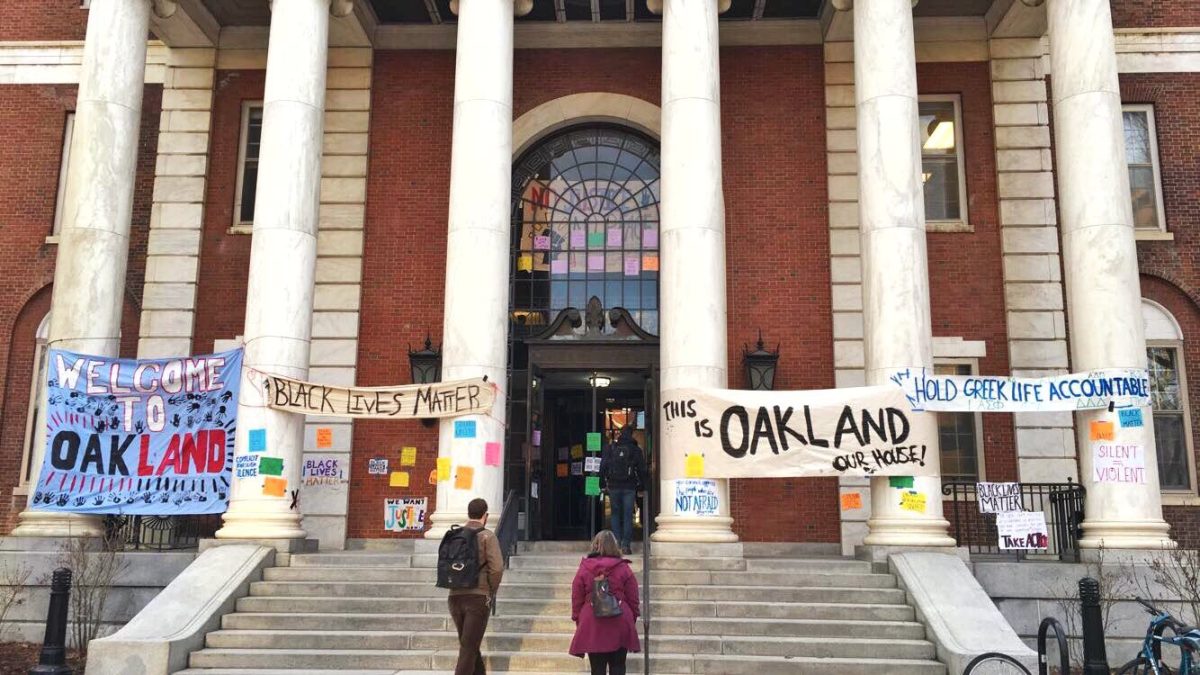
In 1981, 300 protesters marched and surrounded the Sigma Nu fraternity house following a report of sexual assault. Protesters carried posters while shouting “Shut Down Sigma Nu” and held posters, according to a March 1981 Cynic article.
“We are here to show our anger and our power! We want to make it safe to walk the streets of Burlington,” an anonymous protester announced before the march, according to the same article.
Rally organizers had many demands, primarily that UVM stop covering up sexual assault on campus and take action against student offenders.
In 1999, students created the “Anti-Sexual Abuse Project” to educate their peers about sexual violence. They presented a play called “When a Kiss is Not Just a Kiss” to groups on campus such as fraternities and sororities, according to a Feb. 1999 Cynic article.
The play gave the audience time to ask any questions and used theater to help create more dialogue around sexual violence.
In 2007, students rallied again for “Take Back the Night.” Students wore pink arm bands and shirts that read “Consent is Sexy” to show support, according to a Jan. 2007 Cynic article.
“Everyone has the ability to stop sexual violence. This is a time of commitment, and I ask all citizens to join in this,” said previous Burlington Mayor Bob Kiss, in the 2007 article.
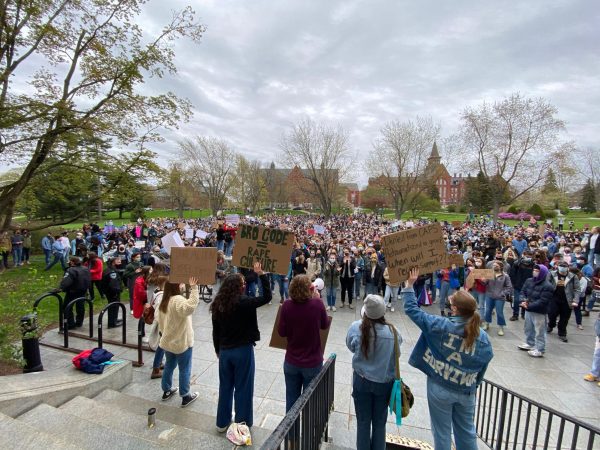
Protests have persisted. In 2021, thousands of students protested and led a walkout, chanting across campus starting at the Redstone Green to Watermen. This was a result of many survivors at UVM stepping forward and sharing their stories, according to a May 2021 Cynic article.
Syd Ovitt, a UVM alum who was actively involved in the protests, said that the 2021 demonstration was a culmination of years of sustained advocacy and organization.
“It was so awesome to see the number of people that did come out,” Ovitt said. “I do think it’s unfortunate that it took so many people publicly having to come forward and share their stories and experiences to get there, but at the end of the day, it was worth it for some real change to happen.”
Student activists presented the administration with 17 demands, ranging from investigating the Office of Equal Opportunity to hiring more Campus Victim Advocates, according to a May 2021 WCAX article.
“There’s been many generations of people who have been working on this,” Ruggles said.
Although lasting change has sometimes been slow, progress has been made. Ruggles’ position was a direct result of student activism following the 2021 protests, he said.
Many other demands have been met, including the creation of the Preventing Interpersonal Violence via Outreach and Training Peer Educator program.
Junior Brynlee Crispin, a current Peer Educator, said the program’s history is always at the forefront of her mind.
“The whole reason this was created was because students wanted something that wasn’t just being created by administration or some outside organization,” Crispin said. “They wanted something personal because that is how a lot of people feel like actual change is enacted, … having something that is created by peers for peers.”
Crispin and her fellow peer educators are paid interns who create and implement social change on campus. The PIVOT program trains these students to organize events, run awareness campaigns and lead workshops to prevent interpersonal violence.
Additionally, PIVOT has been involved in the ongoing planning of this Sexual Violence Awareness Month, according to their website.
“We’ve reimaged Sexual Violence Awareness Month this year to include as many aspects of community and are looking to continue expanding each year,” said Rubi Espejo, Co-Chair of the SGA Sexual Violence Awareness Month Planning Committee.
The month features partnerships with Planned Parenthood, HopeWorks, Civic Engagement and Greek Life. The committee hopes that including many different areas of campus will help to grow the impact, Espejo said.
“The number one thing that we’re constantly talking about is trying to reach out to people and remind them that this isn’t just a women’s issue and it’s not just an issue that survivors are supposed to be dealing with,” Crispin said. “It’s about everyone, it’s about the community.”
Students can visit UVM Bored’s Sexual Violence Awareness Month to view all the initiatives going on throughout the month.