
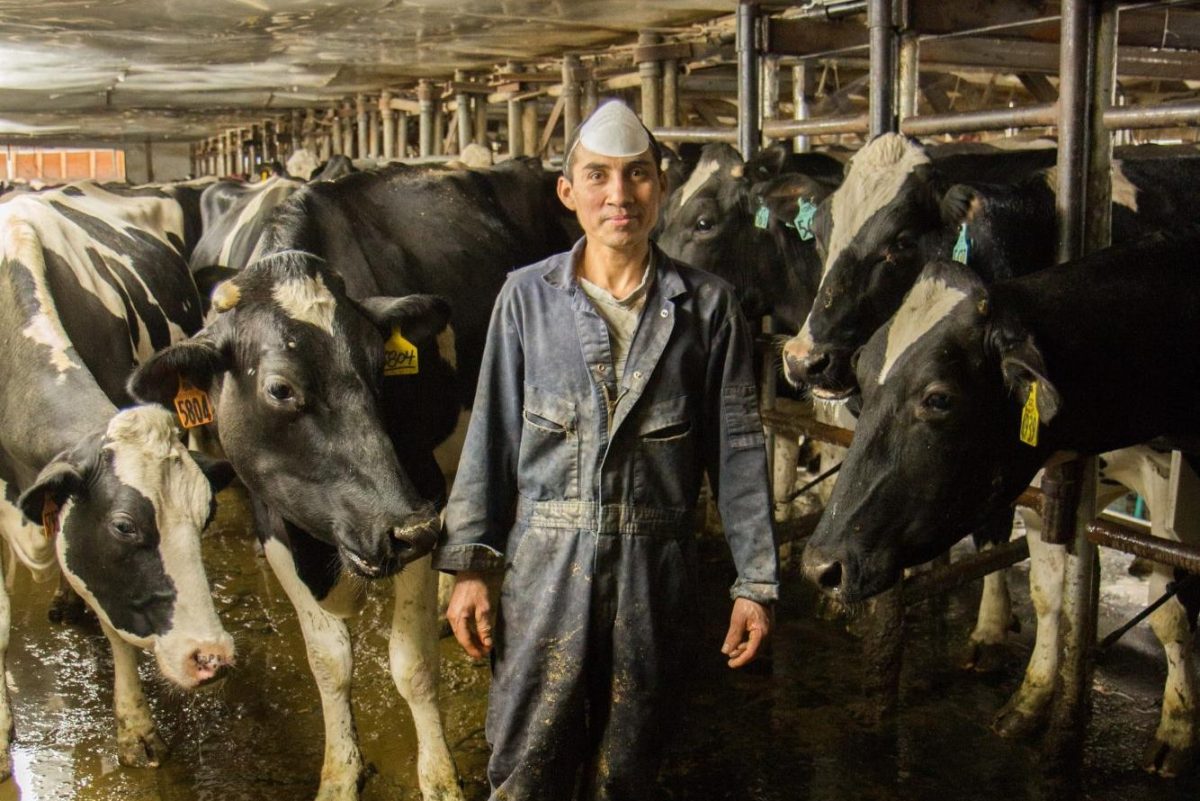
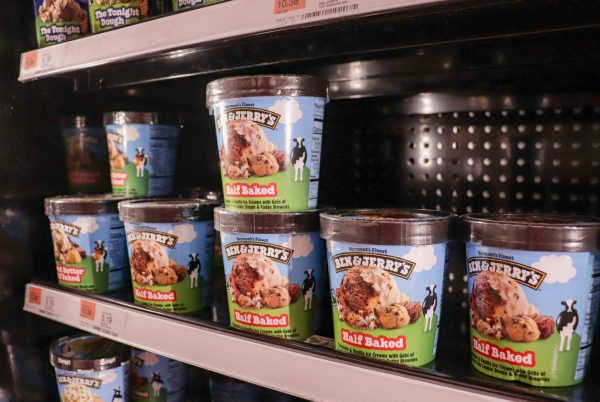
From Ben and Jerry’s ice cream to Cabot cheese, Vermont’s dairy industry generates $5.4 billion annually.
Roughly half of the milk in these products is produced by the labor of undocumented immigrants.
Accounting for 58% of the state’s agricultural output, dairy defines Vermont’s agricultural identity — yet much of the migrant labor sustaining the industry remains invisible to the public.
An estimated 70-90% of Vermont farms rely on migrant labor, said Dr. Teresa Mares, UVM Professor and food anthropologist with over 20 years of experience researching food, immigration and labor.
“Vermont is the most dependent state on a single agricultural commodity, and our commodity is milk,” Mares said.
There are approximately 1,200 -1,500 migrant workers who help sustain Vermont’s dairy farms.
While comprehensive historical data on immigration to Vermont has been difficult to obtain, migration to work on Vermont’s dairy farms likely began in the 1990s, Mares said.
Current migration tracking to Vermont is relatively small compared to other states in the country, and information is largely based on conversations with farmworkers, she said.
While talking with migrant farmworkers, Evan Solnik, senior at UVM and former intern with Migrant Justice, learned that communities from the same regions, even the same neighborhoods, tend to settle together in Vermont.
“It usually starts with a cousin or a friend,” Solnik said. “A lot of people migrated up to Vermont through word of mouth.”
Migrants largely arrive from Mexico — including the states of Tabasco, Veracruz, Chiapas and Guerrero — along with other parts of Latin America, including Guatemala and El Salvador, Mares said.
With over 6,500 farms across the state, Vermont’s agricultural economy attracts and relies on migrant labor.
However, for dairy workers, federal visa pathways are limited, Mares said.
The federal H-2A visa program allows employers to hire temporary foreign labor for agricultural work. Since Vermont dairy farms operate year-round, many migrants are unable to enter through official channels, she said.
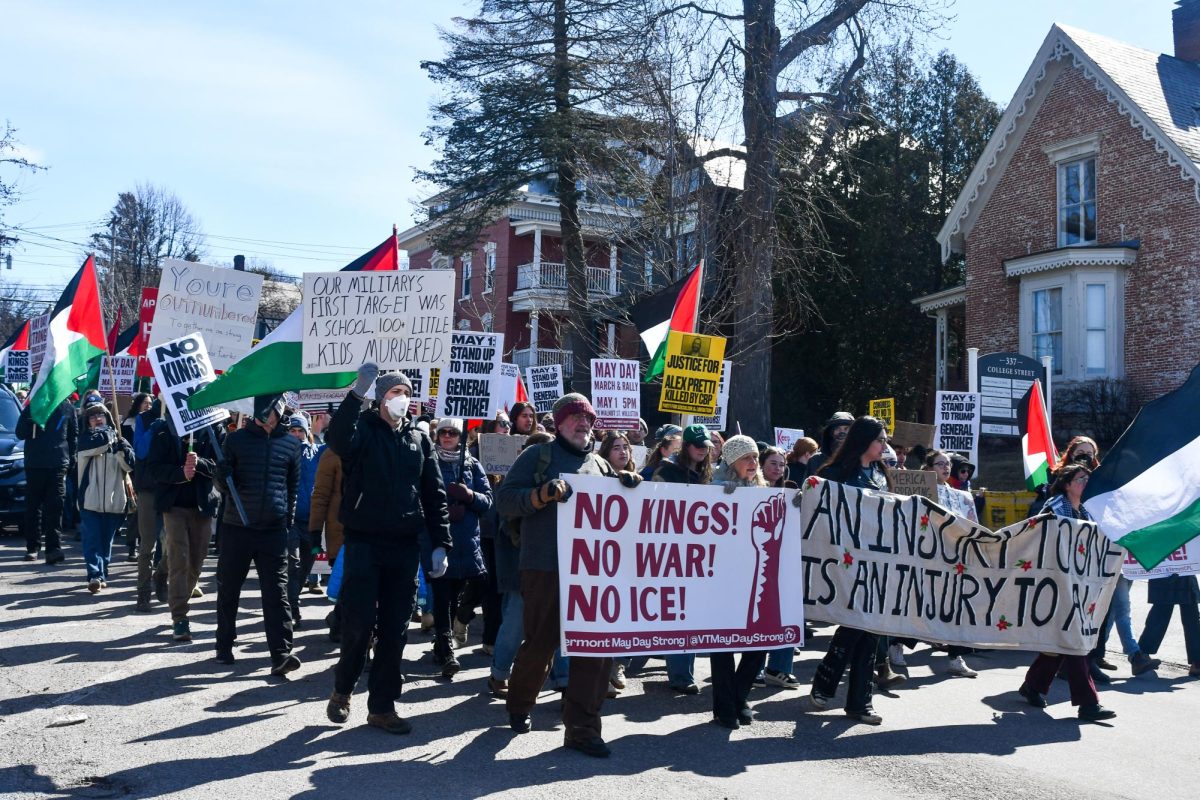
As legal pathways for year-round labor are not clear, fear of arrest and deportation is a constant concern, Solnik said.
Deportations in Vermont rarely occur at the farms, but instead during routine check-ins with ICE, Solnik said.
To ensure that migrants do not face these appointments alone, Migrant Justice accompanies them to the ICE office.
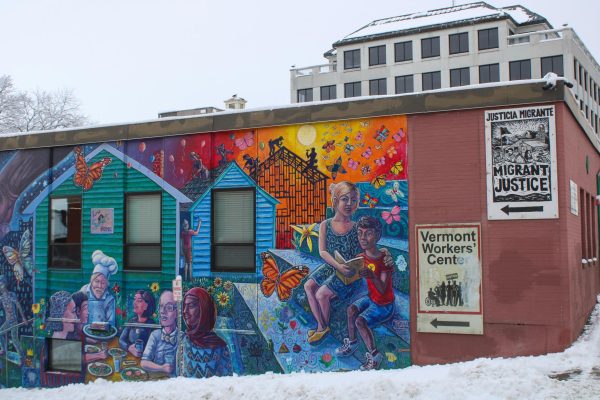
“A big issue with the immigration up here is there’s a lot of isolation,” Solnik said. “They’re stuck in the middle of nowhere on a farm working 12 hours a day, living in some pretty poor housing conditions with minimal safety equipment.”
At Migrant Justice, Solnik helped migrants obtain driver’s licenses to give them more freedom and autonomy. He brought workers from across Vermont to the Department of Motor Vehicles to translate during their written and road tests, he said.
“The DMV work helped a couple people secure their licenses, which was awesome and felt really rewarding,” Solnik said. “It gave them the agency to be able to go out and buy groceries or do some recreational activities.”
For migrants without access to a car, Migrant Justice provides “solidarity driving,” offering transportation to appointments, grocery stores and events, said Caroline, UVM senior and an intern with Migrant Justice who chose not to give her last name for privacy reasons.
While much of Migrant Justice’s work focuses on responding to immediate challenges, their main project targets the structure of the dairy industry itself.
Migrant Justice’s Milk with Dignity program’s premise is simple: if large corporations profit from dairy, they should be the ones responsible for guaranteeing fair working conditions to those who sustain the industry.
“If you look at the food system and where the money is, it’s rarely in the hands of the farmer,” Mares said. “It’s often in the hands of very large, powerful corporations.”
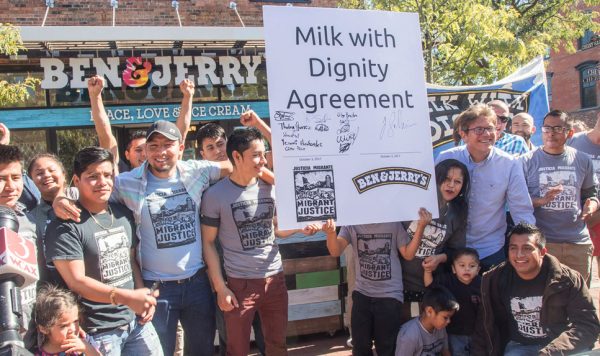
The standard’s code outlines basic labor rights, including clear pay, fair living conditions, workplace safety and zero tolerance for workplace discrimination, according to the Migrant Justice website.
Participating farms agree to follow the code, then corporate dairy buyers sign legally binding agreements with Migrant Justice, committing to only purchase milk from farms enrolled in the program, according to the website.
Corporations also agree to pay a premium on the milk they buy. These extra funds are then given directly to the farms to raise wages and improve housing, safety and training, Mares said.
The program is designed to shift responsibility up toward the corporations profiting off the labor behind the dairy industry, Solnik said.
“The farmers aren’t making much money themselves, so they don’t feel inclined to invest in better living and working conditions,” Solnik said. “So our goal was to kind of trickle down from the big corporations that are profiting off of this.”
Ben and Jerry’s, which primarily sources its milk from local Vermont farms, joined the program in Oct. 2017, becoming the first company to adopt and implement the code, according to the Ben and Jerry’s website.
In 2014, before Milk with Dignity was implemented, Migrant Justice surveyed 172 dairy farmworkers across Vermont about their working and living conditions.
The survey found that 40% of dairy farmworkers reported earning below Vermont’s minimum wage; 40% did not have a day off during the week; and 32% were not treated equally to the U.S.-born workers.
In 2024, Migrant Justice surveyed 212 farmworkers employed on farms not enrolled in the program. The survey found that working and living conditions on non-Milk with Dignity farms worsened over the 10 years.
Farmers working on farms not involved with the Milk With Dignity program have experienced worsening conditions in the past decade.
As of 2024, 20% of Vermont’s total dairy production was covered by the program. Milk with Dignity has invested $5.35 million in workers’ wages, as well as improving labor and housing conditions, according to the 2018-2024 Program Report.
Milk with Dignity has ensured minimum wage compliance, sufficient rest between shifts and investment in workplace safety and housing improvements, according to the Report.
Farmers working on Milk with Dignity farms have experienced higher levels of positive working conditions than those on farms not partnered with the program.
As the second whitest state in the country — with an estimated 91-95% white population — Vermont has not been historically associated with large immigrant communities.
However, the immigrant population has been steadily growing. About 4.5% of Vermont residents are foreign-born, and the number of immigrant residents increased by 3,000 in a decade, according to a 2024 report from the Census Bureau.
“Wherever there are farms, there are migrants,” Caroline said.
As immigration enforcement activity nationwide increases, dairy farmers have expressed concerns about migrant farmworker arrests, according to a May 8, 2025 article from Vermont Public.
“These workers are essential,” stated Vermont Secretary of Agriculture Anson Tebbetts in an interview with Vermont Public. “They’ve been in Vermont for a very long time … Many farmers tell them they consider them members of their family.”
Mares emphasized that closer, one-on-one interactions with migrant workers can help people recognize them as individuals with lives outside of their labor.
“These are people with families, and these are people with artistic skills, and these are people with amazing sets of knowledge,” Mares said. “There’s a whole level of complexity about their lives that I think we need to understand.”
The story of agricultural labor in Vermont does not start in Vermont.
“Migration is a choice among a lot of other difficult choices,” Mares said. “Humans have always migrated. It’s the natural human condition.”