

Editor’s note: as of 11:15am Nov. 16th, this article has been updated to cut and reattribute some statements made by Jen Berger, correct the spelling of Linnea Herzog’s surname, and to accurately differentiate between 242 Main, the all-ages punk club, and the larger building it was housed in, Memorial Auditorium.
Burlington’s Memorial Auditorium is a building with a story. Formerly home to a basketball court as well as an all-ages music venue and youth center known as 242 Main, it has served many purposes for many people.
The layers of graffiti and stickers on its discolored brick walls are indicative of an extensive history, but since 2016, its windows and doors have been boarded up.
“It looks terrible,” said Burlington musician Matthew Kimball. “It’s really, really sad to see it like that, because … it was a very safe place for a lot of people.”
Kimball, who plays bass for Burlington punk band Violet Crimes, was the booking manager at 242 Main in 2016, the same year of the building’s closure.
Performing live since 2023, Violet Crimes is a female-fronted punk band based in Burlington. They have been featured on Liberty or Death Records’ “Women in Punk” Compilation and perform live across New England, according to their Spotify autobiography.
Every show was run by volunteers, and often, bands performed knowing they wouldn’t receive payment, Kimball said.
“It was for the love of it,” he said.
Since the 1980s, 242 Main’s basement shows were an integral part of the punk community in Burlington, said Jen Berger, an interdisciplinary artist and lecturer at UVM.
“Regardless of what marginalized or counterculture community or identities that you’re part of, [242 Main] was the place,” Kimball said.
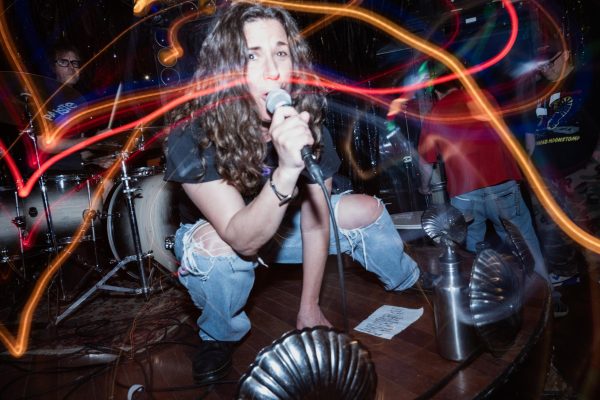
However, this blossoming community faced a new struggle following the closure of not only 242 Main, but many other alternative music venues, said Violet Crimes guitarist Mark Tomasi.
“Back when we started … there were at least five or six different venues,” Tomasi said. “Now, I don’t know if there’s any left.”
In 242 Main’s case, the building’s history didn’t come without consequence; outdated and dangerous infrastructure resulted in 242 Main accruing 26 code violations by the early 2000s. The lack of upkeep led to the building’s closure in 2016, according to a statement from Big Heavy World.
Other venues, such as Nectar’s and Monkey House, experienced higher insurance costs when hosting alternative bands, ultimately deterring them from organizing punk concerts, Tomasi said.
“Apparently, insurance companies make a distinction. If you have heavy music that might involve moshing, then you’ll have a higher insurance premium,” he said.
This unconventional method of dance is only one example of the unique identity formed within punk communities, said Roger Klinger, who plays guitar alongside Tomasi in Violet Crimes.
“We’ve had high school kids, we’ve had our contemporaries all in the mosh pit together, which is just super cool to see,” Klinger said.
Speaking on behalf of her friend who was involved in the Burlington punk scene, Berger noted that venue loss hit the Burlington punk community hard, she said.
“There weren’t a lot of venues, and if you don’t have a venue, then you have to create your own, which means you’re going to get in trouble,” Berger said.
Since punk’s origins in the 1980s, it has been deeply intertwined with radical leftist ideologies. Burlington’s punk movement is rooted in community but centered around a countercultural identity, said Linnea Herzog, Linnea’s Garden singer, songwriter and guitarist.
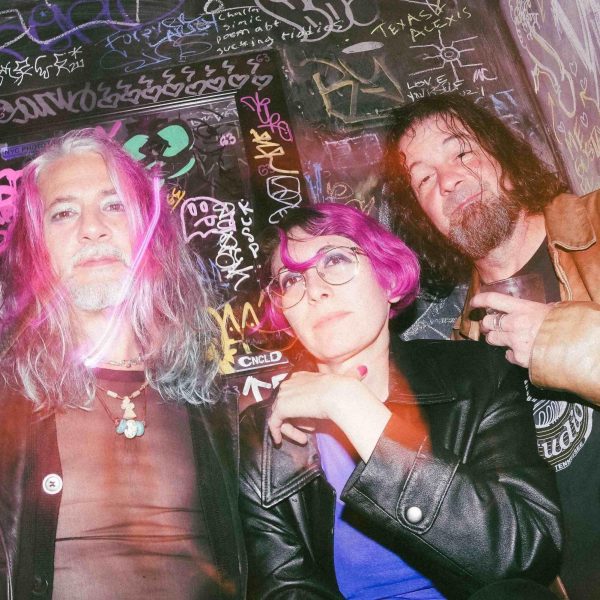
Linnea’s Garden is a riot grrrl-inspired punk band who began in Boston, MA but have toured across the country performing their unapologetically queer and feminist music. Herzog’ counterparts in the band are “Hands,” the bassist and backing vocalist, as well as Ray Clough on drums.
“There’s really no such thing as keeping politics out of punk music and even music in general,” Herzog said. “I feel like the music is my own personal political rally.”
Both in lyrics and expression, anarchist, socialist and anti-institution sentiments can be found within the genre, Herzog said.
“Probably about half of our song lyrics are overtly political, whether they’re pushing back on misogyny or racism or endless war,” said Violet Crimes singer Amy Klinger.
Despite these beliefs, many aspects of the Burlington music scene still center majority groups, particularly heterosexual white men, Berger said.
As a member of a femme-fronted punk band, Herzog has extensive experience in a male-dominated punk community, she said.
“I feel just by existing as a queer femme-fronted band, we shake up the status quo,” she said. “The representation is super important.”
Around the 2010s, femme-identifying Burlington musicians who engaged in the fight for recognition tore down many of the gender barriers they faced, Berger said.
“I remember there was a moment probably in the early 2010s when that started to change because a lot of women got really vocal,” Berger said.
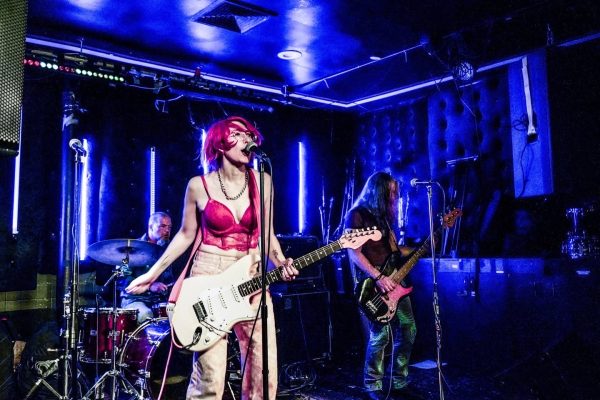
Herzog makes an effort to create band lineups that emphasize the voices of women and femme punk musicians, she said.
“I’ve seen some concert lineups and it’s just all men playing hardcore punk,” Herzog said. “I actually try to not put any all-dude bands on my bills.”
However, the formation of progressive punk spaces through these shows would not be possible without spaces to perform. 1st Republic Brewery in Essex Junction is a valuable space for many punk bands now, Kimball said.
Local band promoter Scott, known by his first name to the punk community, is responsible for booking many concerts at 1st Republic Brewery.
“Promoters like Scott who put on the show are like a huge lifeline for bands that are just self-managed like us,” Herzog said.
In the early 2000s, punk bands had a wide selection of venues to perform at each weekend, but the number of venues has dwindled in recent years, Tomasi said.
“Now that Republic is a big venue, we’ve been playing a lot of shows there,” Roger Klinger said.
Despite the loss of 242 Main and many other venues, punk spaces such as 1st Republic Brewery continue to emerge, creating a future for Burlington punk, Tomasi said.
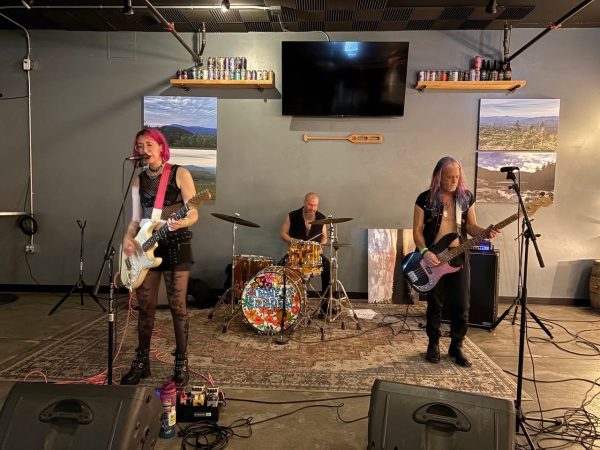
“Thank God we do have the Essex brewery because we don’t really have a home base,” Tomasi said.
Violet Crimes’ use spaces such as 1st Republic to Brewery as a platform to share lyrics that speak out against prejudice, Amy Klinger said.
“In terms of the time period that we’re in and the opportunity that punk music poses to raise awareness, [punk] gives people a voice when they feel like they don’t have one,” she said.
Performing punk music, Herzog agrees, is a liberating experience.
“It’s incredibly powerful to have something where I can just go at my own pace, retain my autonomy, and just basically do it on my own terms,” Herzog said. “[Music] doesn’t have a cog in the corporate machine at all, and that feels like an active political rebellion.”
The essence of Burlington’s punk scene should be for those who are often overlooked, Kimball said.
“There are a lot of bands that are using their music as a voice,” Amy Klinger said. “I think it helps facilitate this sense that you’re not alone in thinking the world is really shitty right now.”